¿Que es una red Mesh?

Sencillo, varios nodos de una red que ayudan a expandir la conexión en una red inalámbrica, con equipos AP con esta tecnología “Mesh”

– Y de qué me sirve o para qué es?

Bueno, imagina que vas caminando en el corredor o lobby de un hotel, tienes acceso a la red Wi-Fi que te dieron al registrarte, y ya vas rumbo a tu habitación o cabaña, pero notas que siempre tienes Wi-Fi, y ya estas en tu habitación “Cabaña” y tu desplazamiento a sido significativo, es decir unos 150 o 250 metros, entre muros, puertas etc.

Bueno así es como funciona la red Mesh, con AP´s colocados estratégicamente en las áreas, estos se comunican entre sí, para seguir dándote Wi-Fi sin tener que estar re-conectado a la red una y otra vez. “esto es de modo transparente para el usuario de la red Wi-Fi”

Las aplicaciones pueden ser infinitas, casas, hoteles, areas abiertas, empresas, hospitales, etc…

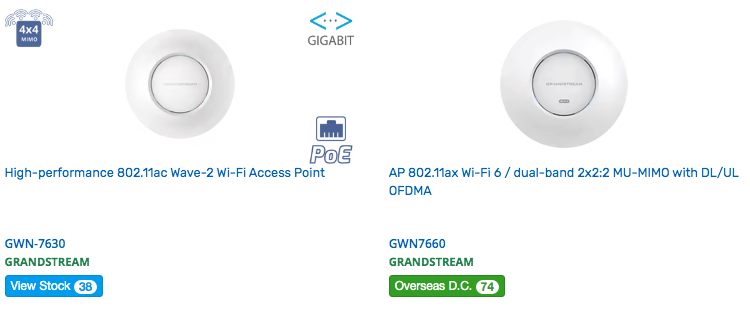
Con GRANDSTREAM tenemos estos AP´s WiFi 5 y 6, con la funcionalidad Mesh.

GWN-7630GWN-7605GWN-7615GWN7605LRGWN7630LRGWN-7602GWN7660

What is a Mesh Network?

Simple is a group of network nodes that help expand the wireless connection with Access Point devices with “Mesh” technology.

  • What is its application?

Imagine walking in a corridor or lobby of a hotel, having access to the Wi-Fi network when you check-in, and going to your room or “lodge,” and the distance is significant, about 150 or 250 meters, between walls, doors, etc.

Mesh networks operate with AP’s strategically placed in areas where they communicate to keep sending Wi-Fi without re-connecting to a network each time. “This is a transparent mode for the user of the Wi-Fi network.

The application can be infinite, homes, hotels, open areas, businesses, hospitals, etc.

With GRANDSTREAM, we have these AP’s Wi-Fi 5 and 6, with Mesh functionality.

GWN-7630GWN-7605GWN-7615GWN7605LRGWN7630LRGWN-7602GWN7660

Entendiendo las bandas e Idiomas

Me confundo con los términos y funciones de operación:

Equipos PTP, PTMP, WiFi, las marcas, Cambium MIMOSA, Grandstream, Ubiquiti???

  • Sencillo y rápido: las carreteras principales son 2.4 y 5 GHz, estas carreteras son las mas comunes, están homologadas y también saturadas “es lo malo”

A respuesta de estas carreteras saturadas en 2.4 y 5 GHz, existen opciones como las carreteras en 11 GHz, 24 GHz, 60 GHz etc. Por ejemplo: “B11 o B24 de Mimosa “

Inge, pero como es esto, Wi-Fi usa esas mismas carreteras?

  • Es correcto, de ahí viene también lo saturado, mismas carreteras, pero hablando IDIOMAS DIFERENTES, Wi-Fi es un idioma universal, Mimosa y Cambium hablan su propio idioma, al igual pasa con Ubiquiti.

No entiendo cómo Wi-Fi es un Idioma universal?

  • Claro, es como hablar ingles, las marcas como Grandstream, Ruijie, Ubiquiti, decidieron crear equipos que hablen el idioma universal “Wi-Fi  802.11b / g / n / ac”

Inge, Quién habla este idioma universal Wi-Fi?

  • Sencillo, los smartphones, las laptops, PCs, Tablets, Equipos LoT como los Alexa, Google Home, routers de casa, routers Wisp, etc.

Inge, y porque las marcas se metieron a producir equipos que hablaran Wi-Fi?

  • Mas sencillo aún, aquí hay mucha necesidad y dinero, entonces marcas con tanta experiencia en desarrollo de radios, antenas etc, le entraron a crear AP´s que hablen Wi-Fi  802.11xx, esto independientemente de sus equipos PTP o PTMP que hablan sus propios idiomas para enlaces de mediano y largo alcance y aplicaciones WIPS…

Inge, ultima pregunta, y como los diferenciamos o como los identifico?

  • Bueno, cada marca le da un nombre que genere impacto y marketing, como es:

Ubiquiti: lo llama UniFi

Cambium: cnPilot

Grandstream: GWNxx Series

Recuerda, si habla Wi-Fi 802.11xx, estos equipos son para conectar tu celular, tu laptop. tablet y que tengas internet, como sucede en los hoteles, las casas, áreas abiertas como parques etc.

Understanding Frequency Bands and Languages

I get confused with the terms and operation functions:

PtP, PtMP, Wi-Fi devices, brands, MIMOSA Cambium, Grandstream, Ubiquiti???

  • Quick and easy: the main roads are 2.4 and 5 GHz; these roads are the most common; they are homologated and also saturated “that is the drawback.”

As a response to saturated roads in 2.4 and 5 GHz, there are options such as 11 GHz, 24 GHz, 60 GHz, etc. For example, “Mimosa’s B11 or B24.”

How does that work? Doesn’t Wi-Fi use the same roads?

  • That is correct, this is why they’re saturated, same roads, but we speak DIFFERENT LANGUAGES, Wi-Fi is a universal language, Mimosa and Cambium speak their own language, the same as Ubiquiti.

I don’t understand how is Wi-Fi a universal language?

  • It is like speaking English; brands such as Grandstream, Ruijie, Ubiquiti have manufactured devices that speak the universal language “Wi-Fi 802.11b / g / n / ac.”

Who speaks this universal Wi-Fi language?

  • Cellphones, laptops, PCs, Tablets, IoT devices such as Alexa, Google Home, home routers, WISP routers, etc.

Why did brands start manufacturing Wi-Fi devices?

  • There was a high demand, so these brands, with experience in the development of radios, antennas, etc, started creating APs that communicate in Wi-Fi 802.11xx, regardless of their PTP or PTMP equipment that speaks their own language for medium and long-range links and WIPS applications…

How do we determine or identify their Wi-Fi devices?

  • Each brand has a different name to generate impact and market them: such as

Ubiquiti: calls it UniFi

Cambium: cnPilot

Grandstream: GWNxx Series

Remember, if it speaks Wi-Fi 802.11xx, these devices are to connect your smartphone, your laptop, tablet to the internet and give service in hotels, houses, and open areas such as parks, etc.