E-Series, the new product line of video surveillance by epcom

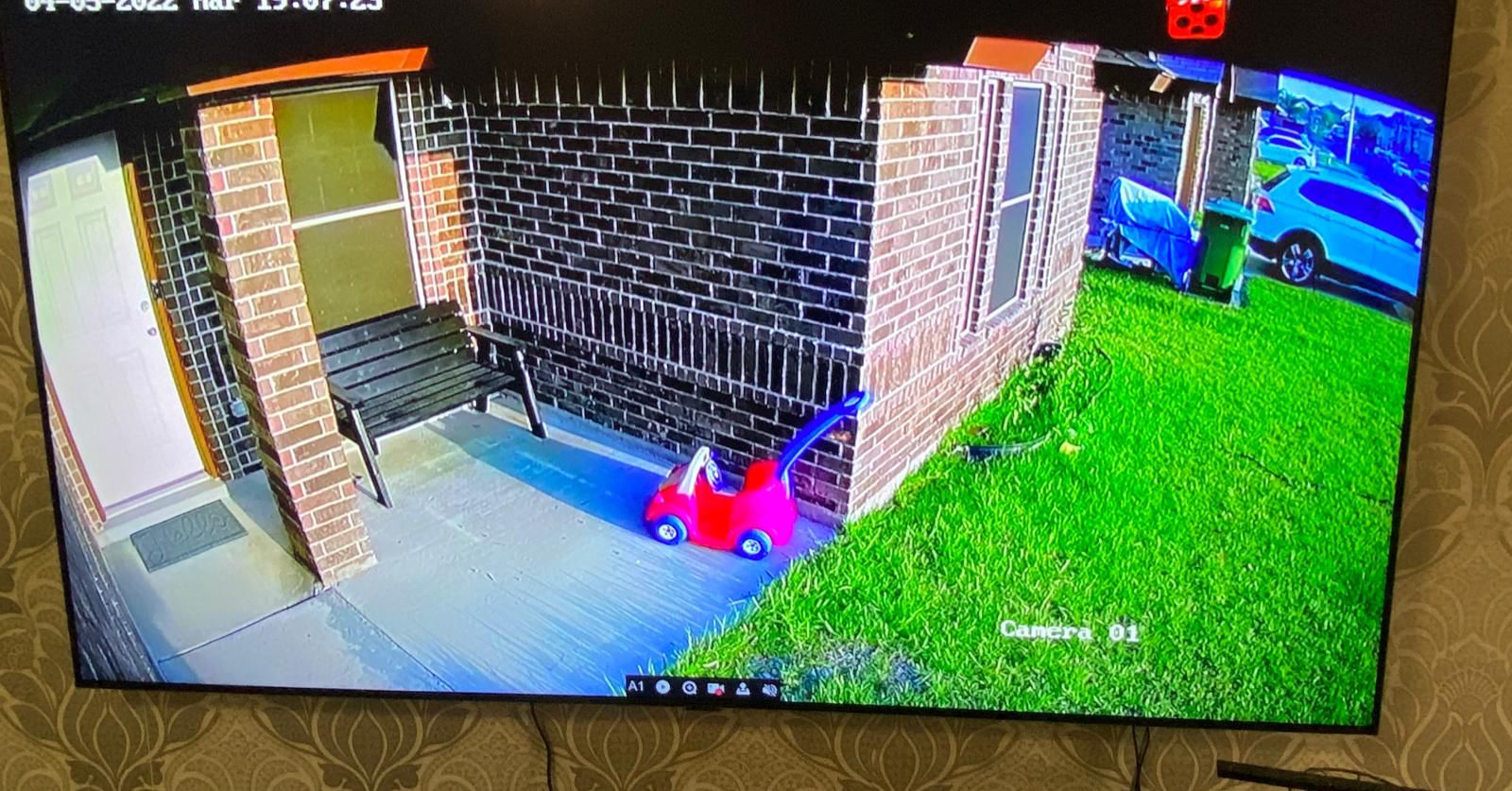
In light of accelerated growth in video surveillance systems, epcom introduces to its portfolio a new product line, the E-Series, a line of cameras analog, IP, NVRs, and DVRs that deliver from 2MP up to 8MP (4k) with night vision and some models feature 24/7 color image. Besides including versions with high protection grade IP67 metallic and WDR associated with white and color balancing for conditions of complicated illumination, delivering a clear, high-quality image.

The new E-Series product line is ideal for small or medium installations. It adapts perfectly to homes and retail stores.
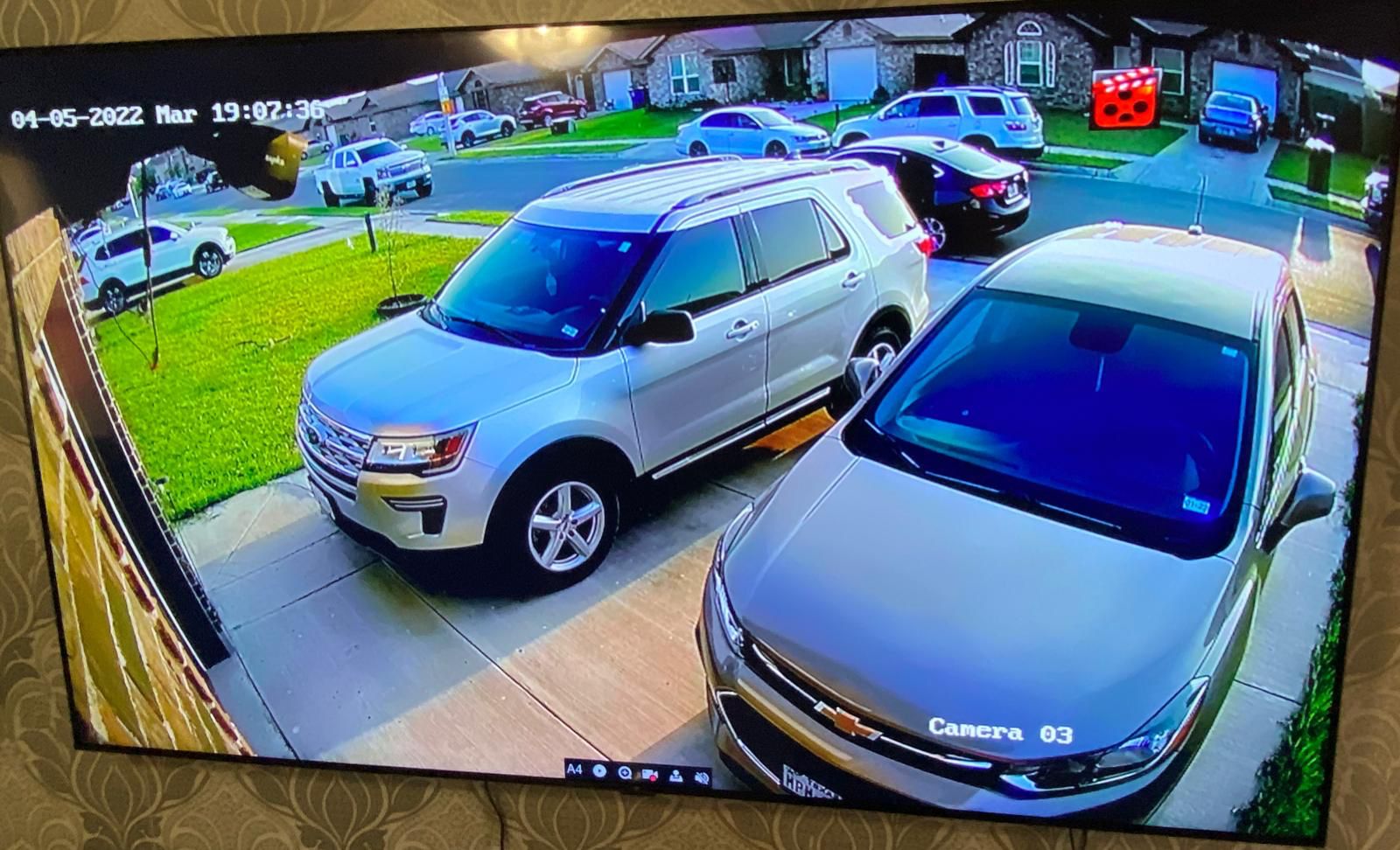
The recorders feature H265 and H265+ compression systems, which can drastically reduce the storage consumption and bandwidth, and features an HDMI and VGA output, as the connection for P2P for accessible and user-friendly remote monitoring, from 4 up to 16 channels.

One of the most relevant points in this new line of video surveillance is that all devices feature certified NDAA and a five-year warranty.

The management of the video surveillance system is carried out through the software for PC and mobile; Among the most critical functions are:

  • Reproduction: synchronous/asynchronous reproduction, smart search, recording search by time/event.
  • Recording: Local recording, programmed recording, recording download.
  • Efficient management of devices: Automatic detection of the equipment on the line or search for a specific segment in the network.
  • Live view: Custom layout, split-screen, auxiliary screens, corridor or carousel mode, audio.
  • Remote monitoring: The SuperCam Plus app allows you to monitor your video surveillance system from anywhere.

To learn more about E – Series, you can visit our web portal or contact us.
The Dangers of Lock Picking

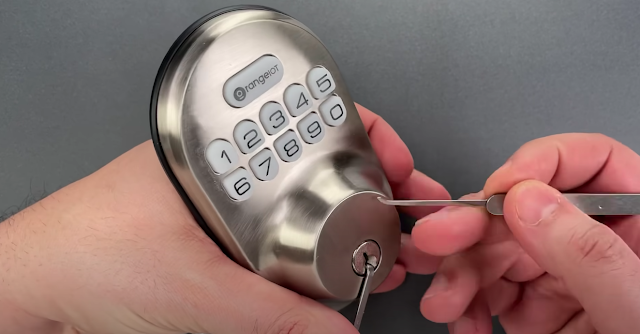
The Youtuber LockPickingLawyer, with more than 50 Million monthly views, has become a sensation with short tutorials where he explains how to open practically any lock.

He has videos that show examples such as high-security locks, vehicle locks, and even professional locks like Mul-T-Lock.

His videos show us how vulnerable any mechanical system is and how easy it is to get tools to abuse any mechanism.

But that’s not all, it also demonstrates basic vulnerabilities in electronic access control systems where there is no controller present or it is a low-level terminal:

He is very good at explaining, and one can spend several hours watching videos without stopping.

All the videos follow the same format: Talk about the lock model or manufacturer, “Picking,” and then disassemble the equipment to understand how it is inside.

In the end, we conclude:

  • If access to an area depends on a mechanical lock, however secure it may be, it is possible to violate it by following a video on Youtube.
  • Our Access Leader always mentions: “What is exposed will always be vulnerable.”

How to avoid lockpicking? How does a Professional Access Control System Works?

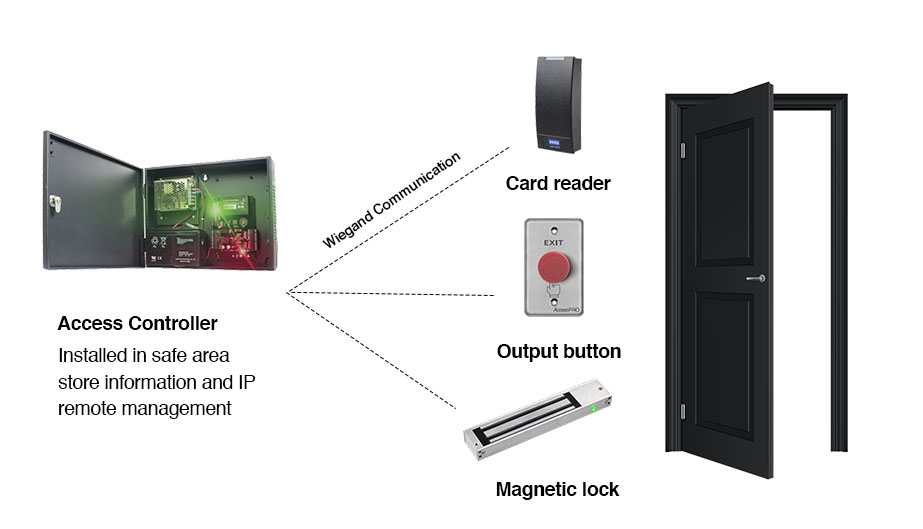
Professional access control uses an access controller to activate/deactivate the lock; the reader/biometric is not directly connected to the lock.

In this example, a card reader sends the information to a controller and opens the door:

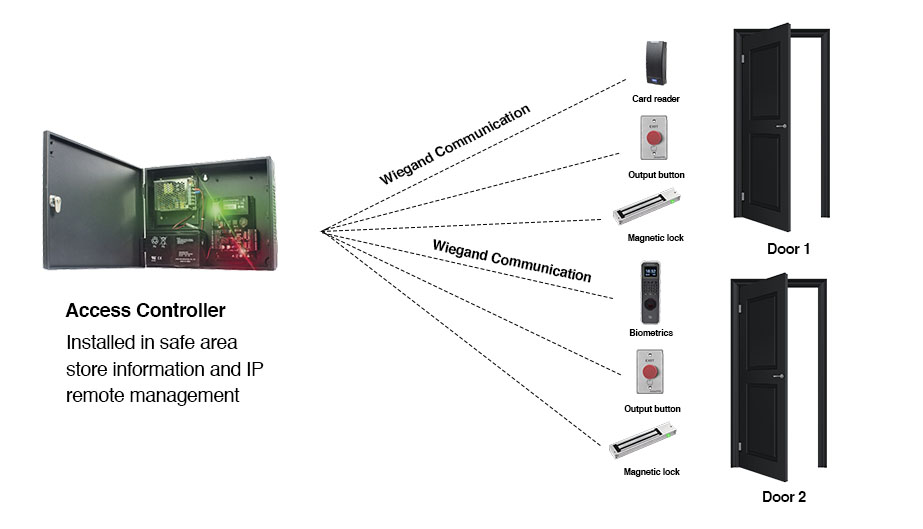
A controller or group of controllers can manage several doors in different locations or cities.

¿Que es una red Mesh?

Sencillo, varios nodos de una red que ayudan a expandir la conexión en una red inalámbrica, con equipos AP con esta tecnología “Mesh”

– Y de qué me sirve o para qué es?

Bueno, imagina que vas caminando en el corredor o lobby de un hotel, tienes acceso a la red Wi-Fi que te dieron al registrarte, y ya vas rumbo a tu habitación o cabaña, pero notas que siempre tienes Wi-Fi, y ya estas en tu habitación “Cabaña” y tu desplazamiento a sido significativo, es decir unos 150 o 250 metros, entre muros, puertas etc.

Bueno así es como funciona la red Mesh, con AP´s colocados estratégicamente en las áreas, estos se comunican entre sí, para seguir dándote Wi-Fi sin tener que estar re-conectado a la red una y otra vez. “esto es de modo transparente para el usuario de la red Wi-Fi”

Las aplicaciones pueden ser infinitas, casas, hoteles, areas abiertas, empresas, hospitales, etc…

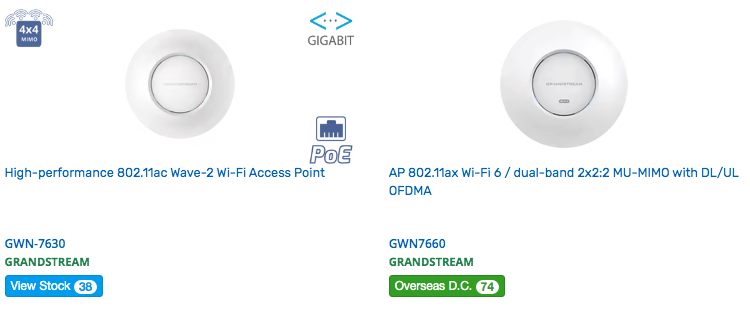
Con GRANDSTREAM tenemos estos AP´s WiFi 5 y 6, con la funcionalidad Mesh.

GWN-7630GWN-7605GWN-7615GWN7605LRGWN7630LRGWN-7602GWN7660

What is a Mesh Network?

Simple is a group of network nodes that help expand the wireless connection with Access Point devices with “Mesh” technology.

  • What is its application?

Imagine walking in a corridor or lobby of a hotel, having access to the Wi-Fi network when you check-in, and going to your room or “lodge,” and the distance is significant, about 150 or 250 meters, between walls, doors, etc.

Mesh networks operate with AP’s strategically placed in areas where they communicate to keep sending Wi-Fi without re-connecting to a network each time. “This is a transparent mode for the user of the Wi-Fi network.

The application can be infinite, homes, hotels, open areas, businesses, hospitals, etc.

With GRANDSTREAM, we have these AP’s Wi-Fi 5 and 6, with Mesh functionality.

GWN-7630GWN-7605GWN-7615GWN7605LRGWN7630LRGWN-7602GWN7660

Sigamos hablando sobre cable par trenzado

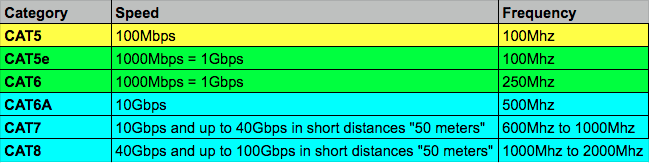
Dentro de los cables par trenzado, tenemos las siguientes categorías que anexo en esta tabla:

Es importante saber la categoría correcta, por lo general y lo que más se consume es el CAT5e por su buen precio y prestaciones, como son los modelos:

PRO-CAT5-EXT-LITEWPRO-CAT-5-EXT-V2
PRO-CAT-5E-GELX-250FT
PRO-CAT-5E
PRO-CAT-5E-GELX
PRO-CAT-5E-W
EP-CAT-5E-V2
EP-CAT-5E-V2/W

La categoría CAT6 y CAT6A, puede ser un poco más costosa, pero esta tiene beneficios principalmente  son las altas velocidades de datos que puede alcanzar, que son hasta los 40 Gbps a cortas distancias, máximo 50 metros el CAT6A .

PRO-CAT-6-EXT-LITEW
PRO-CAT-6-EXT-V2
PRO-CAT-6-PLUS
PRO-CAT-6-EXT-LITE
PRO-CAT-6B
PRO-CAT-6-GELX
PRO-CAT-6-EXT

Let’s continue talking about twisted pair cables

For twisted-pair cables, we have the following categories shown below.

It is essential to know the correct category. Generally, the most used type is CAT5e for its great price and features, for example:

PRO-CAT5-EXT-LITEW
PRO-CAT-5-EXT-V2
PRO-CAT-5E-GELX-250FT
PRO-CAT-5E
PRO-CAT-5E-GELX
PRO-CAT-5E-W
EP-CAT-5E-V2
EP-CAT-5E-V2/W

The CAT6 and CAT6A category can be more expensive, but it has their benefits, mainly high data speeds of about 40 Gbps in short distances, maximum of 50 meters to the CAT6A.

PRO-CAT-6-EXT-LITEW
PRO-CAT-6-EXT-V2
PRO-CAT-6-PLUS
PRO-CAT-6-EXT-LITE
PRO-CAT-6B
PRO-CAT-6-GELX
PRO-CAT-6-EXT

Resumen de cables de par trenzado.

Recordemos que existen muchas variantes, estaremos hablando de ellas en próximos materiales de contenido interno, pero estas son las 3 principales y básicas:

Cable UTP, consta de 4 pares trenzados, con cubierta PVC, para aplicaciones como CCTV Análogo, Redes de datos, telefonía IP, CCTV IP, etc.

  • Puede ser en versiones de 100% Cobre “CU” o versiones de aleaciones con aluminio “CCA”.-
  • 100 Ohms
  • 24 AWG

EP-CAT-5E-V2
EP-CAT-5E-V2/W
EP-CAT-5E-V2B
PRO-CAT-5E
PRO-CAT-6-EXT-LITEW
PRO-CAT5-EXT-LITEW

Cable FTP, consta de 4 pares trenzados, con cubierta PVC, para aplicaciones como CCTV Análogo, Redes de datos, telefonía IP, CCTV IP, etc. “OJO puede pasar cerca de  campos electromagnéticos como los que generan grandes transformadores” gracias a su blindaje.

  • “Blindaje” Cubierta de Poliéster aluminizado, Recubre los 4 pares trenzados
  • Poliéster aluminizado ayuda a las interferencias electromagnéticas
  • 120 Ohms
  • 24 AWG

PRO-CAT-5-EXT
PRO-CAT-6-EXT
PRO-CAT-6-EXT/500
FT-CAT-5-E

Cable STP y S/FTP, consta de 4 pares trenzados, con cubierta PVC, exclusivo para entornos de alta demanda y alta perturbación de radiación electromagnética .

  • “Blindaje” malla de Poliéster aluminizado o cobre, Recubre los 4 pares trenzados
  • “Blindaje” Cubierta de Poliéster aluminizado, Recubre cada par trenzado
  • Poliéster aluminizado ayuda a las interferencias electromagnéticas
  • Configuración o mensajero para conexión a tierra física
  • 150 Ohms
  • 24 AWG

9T7L4-E10
PSL7004BU-CED
PSL7004WH-CED
PSL7004GR-CED

Guide to Twisted Pair Cables

epcom has an extensive catalog. We will be talking about them in future internal content materials, but these are the 3 main basics:

UTP cable consists of 4 twisted pairs, with PVC cover, for applications such as Analog CCTV, Data network, IP telephony, IP CCTV, etc.

  • The cable can be 100% copper “CU” or aluminum alloy “CCA.”
  • 100 Ohms
  • 24 AWG

EP-CAT-5E-V2
EP-CAT-5E-V2/W
EP-CAT-5E-V2B
PRO-CAT-5E
PRO-CAT-6-EXT-LITEW
PRO-CAT5-EXT-LITEW

FTP cable consists of 4 twisted pairs, PVC cover, for applications such as Analog CCTV, Data networks, IP telephony, IP CCTV, etc. “NOTE: the cable can place it near electromagnetic fields like those caused by generators thanks to its shielding.”

  • “Shielded” cover protects the 4 twisted pairs
  • aluminized polyester protects against electromagnetic interference
  • 120 Ohms
  • 24 AWG

STP and S/FTP cable consists of 4 twisted pairs, PVC cover, exclusive for high demand environments and high electromagnetic radiation disturbance.

  • “Shielded” aluminum or copper mesh and polyester protect the 4 twisted pairs
  • “Shielded” aluminized polyester cover protects each twisted pair
  • Prevents electromagnetic interference
  • Grounding copper cable
  • 150 Ohms
  • 24 AWG

9T7L4-E10
PSL7004BU-CED
PSL7004WH-CED
PSL7004GR-CED

Entendiendo las bandas e Idiomas

Me confundo con los términos y funciones de operación:

Equipos PTP, PTMP, WiFi, las marcas, Cambium MIMOSA, Grandstream, Ubiquiti???

  • Sencillo y rápido: las carreteras principales son 2.4 y 5 GHz, estas carreteras son las mas comunes, están homologadas y también saturadas “es lo malo”

A respuesta de estas carreteras saturadas en 2.4 y 5 GHz, existen opciones como las carreteras en 11 GHz, 24 GHz, 60 GHz etc. Por ejemplo: “B11 o B24 de Mimosa “

Inge, pero como es esto, Wi-Fi usa esas mismas carreteras?

  • Es correcto, de ahí viene también lo saturado, mismas carreteras, pero hablando IDIOMAS DIFERENTES, Wi-Fi es un idioma universal, Mimosa y Cambium hablan su propio idioma, al igual pasa con Ubiquiti.

No entiendo cómo Wi-Fi es un Idioma universal?

  • Claro, es como hablar ingles, las marcas como Grandstream, Ruijie, Ubiquiti, decidieron crear equipos que hablen el idioma universal “Wi-Fi  802.11b / g / n / ac”

Inge, Quién habla este idioma universal Wi-Fi?

  • Sencillo, los smartphones, las laptops, PCs, Tablets, Equipos LoT como los Alexa, Google Home, routers de casa, routers Wisp, etc.

Inge, y porque las marcas se metieron a producir equipos que hablaran Wi-Fi?

  • Mas sencillo aún, aquí hay mucha necesidad y dinero, entonces marcas con tanta experiencia en desarrollo de radios, antenas etc, le entraron a crear AP´s que hablen Wi-Fi  802.11xx, esto independientemente de sus equipos PTP o PTMP que hablan sus propios idiomas para enlaces de mediano y largo alcance y aplicaciones WIPS…

Inge, ultima pregunta, y como los diferenciamos o como los identifico?

  • Bueno, cada marca le da un nombre que genere impacto y marketing, como es:

Ubiquiti: lo llama UniFi

Cambium: cnPilot

Grandstream: GWNxx Series

Recuerda, si habla Wi-Fi 802.11xx, estos equipos son para conectar tu celular, tu laptop. tablet y que tengas internet, como sucede en los hoteles, las casas, áreas abiertas como parques etc.

Understanding Frequency Bands and Languages

I get confused with the terms and operation functions:

PtP, PtMP, Wi-Fi devices, brands, MIMOSA Cambium, Grandstream, Ubiquiti???

  • Quick and easy: the main roads are 2.4 and 5 GHz; these roads are the most common; they are homologated and also saturated “that is the drawback.”

As a response to saturated roads in 2.4 and 5 GHz, there are options such as 11 GHz, 24 GHz, 60 GHz, etc. For example, “Mimosa’s B11 or B24.”

How does that work? Doesn’t Wi-Fi use the same roads?

  • That is correct, this is why they’re saturated, same roads, but we speak DIFFERENT LANGUAGES, Wi-Fi is a universal language, Mimosa and Cambium speak their own language, the same as Ubiquiti.

I don’t understand how is Wi-Fi a universal language?

  • It is like speaking English; brands such as Grandstream, Ruijie, Ubiquiti have manufactured devices that speak the universal language “Wi-Fi 802.11b / g / n / ac.”

Who speaks this universal Wi-Fi language?

  • Cellphones, laptops, PCs, Tablets, IoT devices such as Alexa, Google Home, home routers, WISP routers, etc.

Why did brands start manufacturing Wi-Fi devices?

  • There was a high demand, so these brands, with experience in the development of radios, antennas, etc, started creating APs that communicate in Wi-Fi 802.11xx, regardless of their PTP or PTMP equipment that speaks their own language for medium and long-range links and WIPS applications…

How do we determine or identify their Wi-Fi devices?

  • Each brand has a different name to generate impact and market them: such as

Ubiquiti: calls it UniFi

Cambium: cnPilot

Grandstream: GWNxx Series

Remember, if it speaks Wi-Fi 802.11xx, these devices are to connect your smartphone, your laptop, tablet to the internet and give service in hotels, houses, and open areas such as parks, etc.